When a personal vendetta turned into an international manhunt
A man with a grudge against our client felt wronged. Rather than let it go, he started making threats. Over the following months, they escalated across email and social media and spread to other professionals connected to the situation. Eventually, he announced a plan for mass violence. This is how Ironwall caught the danger early and stayed with the case all the way to a federal courtroom.
At a glance
Threat pattern
- Escalating threats over email and social media
- Other professionals targeted too
- A declared plan for mass violence
Threat pattern
- Escalating threats over email and social media
- Other professionals targeted too
- A declared plan for mass violence
Ironwall response
- Emergency Support Protocol activated
- Monitored 7 days a week for nearly 7 months
- Christmas Day bomb threat flagged
- Ongoing coordination with law enforcement
The outcome
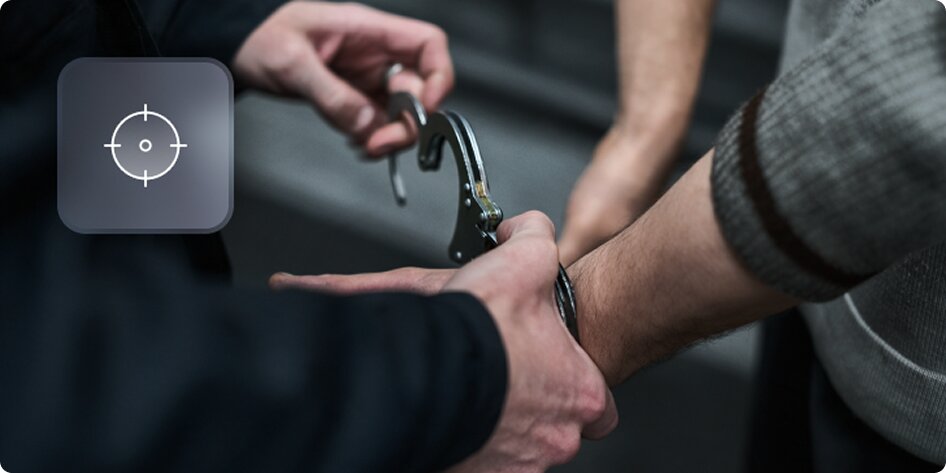
- Arrested at the border, thanks to Ironwall’s location intelligence
- Ironwall’s reports entered as trial evidence
- Convicted on federal charges
This wasn’t the first time we’d followed a threat from a screen to a courtroom, and it won’t be the last. It took months of constant, painstaking monitoring to catch the subject just at the right moment to enable law enforcement to arrest him.
Just holding a title is enough
Threats like this aren’t rare, and they’re becoming more common. At Ironwall, we’ve seen a steady rise in threats against the people we protect. The wider industry is seeing it too. In Allied Universal’s 2025 World Security Report, nearly half (46%) of US chief security officers said the threat of violence toward executives had grown over the past two years.
This case started the way many of them do. A decision didn’t go one man’s way, and he refused to accept it. He blamed our client, whose role put them at the center of that decision. That’s when the subject fled the country, and the threats began.
At first, they were aimed at our client. But soon enough, he was also targeting other professionals who had nothing to do with the situation. They weren’t involved in the decision, and most had never heard his name. They simply held similar roles and, to him, that was enough. None of them knew he was planning violence against them.
That’s what makes these threats so hard to see coming. You don’t have to make a controversial call yourself to become a target. You don’t even have to be involved. Sometimes, the title you hold is all it takes. A physician delivering a hard diagnosis, an HR leader handling a termination, or an executive behind a layoff all face the same risk.
Reading the difference between anger and danger
For our client, that risk was already real. Ironwall spotted the threats early, and flagged them to our client’s organization right away. Then came the harder question: how dangerous was this disgruntled man, really?
That isn’t always obvious. Not every alarming message carries the same risk, and not every calm one is safe. A message that openly threatens to kill can sometimes be less dangerous than one that never mentions violence at all. Telling the difference takes training. Ironwall’s threat specialists learn it from former US federal law enforcement.
In this case, the signs were clear from the start. Our specialists classified the threat at the highest level from day one, and what came next proved them right. Over time, his fixation hardened into obsession. His messages grew more explicit and more disturbing. Eventually, he declared a plan for mass violence.
Seven months on emergency protocol
A threat that severe called for more than routine monitoring. Ironwall activated its Emergency Support Protocol, which meant continuous, heightened protection for as long as the danger stayed active. No one knew yet that it would last nearly seven months.
He was volatile, and he posted constantly. So the Ironwall specialists assigned to the case checked his activity every couple of hours, seven days a week. Each time things escalated, they alerted the law enforcement officers working the case so they could respond quickly. Everything we found went straight to investigators as they built their case.
Holidays were no exception. On Christmas Day, a specific bomb threat surfaced. Ironwall acted immediately, alerting law enforcement so they could check the targeted locations before anyone arrived.
As the months went on, he grew more unstable. He also started to move. Our team began watching not just what he said, but where he was and where he might be heading.
There until the threat was gone
Eventually, he tried to come back to the US. Ironwall’s location intelligence told authorities where and when he planned to re-enter the country. When he reached the border, law enforcement was waiting.
His arrest was a turning point, but Ironwall’s role wasn’t over. Our monitoring reports were entered as evidence when the case went to trial. A federal jury found him guilty on multiple counts related to his threats. He was later sentenced to several years in federal prison.
From the first flagged post to the final verdict, Ironwall was there at every stage. Our work helped prosecutors build the case that convicted him.
We weren’t finished when the immediate danger passed. We were finished when the threat was gone.
Please note: All case studies are described in ways that preserve our clients’ safety and anonymity.
Your title is public. Your protection should be personal.
When your role puts you in the spotlight, Ironwall has your back. We catch threats early, act fast, and stay with you until you’re safe.